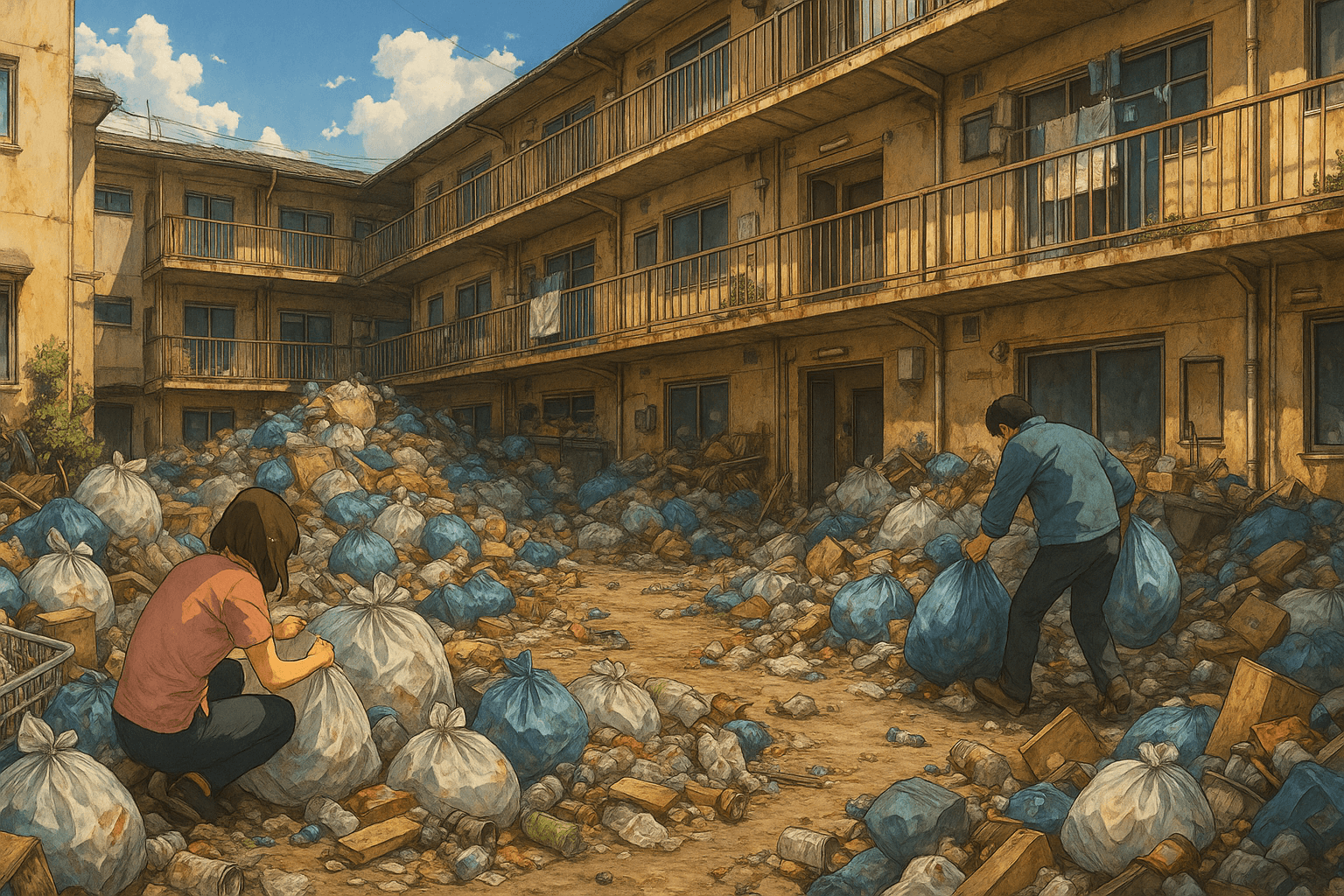
The Psychology Behind Garbage Chaos in Subsidized Housing
Garbage problems are operational problems, not a reason to make assumptions about residents or the type of housing they live in. Clear instructions, reliable collection, accessible disposal areas, and prompt reporting give everyone a practical way to keep shared spaces usable.
Garbage problems can make a building feel harder to manage than they need to be. A bag left beside a chute, cardboard blocking a room, or an overflowing bin can quickly become the next person's problem.
I do not see that as a reason to diagnose residents or attach a story to the type of housing they live in. Subsidized, mixed income, and market rent buildings all need the same basics: disposal areas that work, instructions people can find, and a clear way to report a problem before it grows.
The useful question is not why a certain kind of resident behaves a certain way. It is whether the building's garbage setup makes the right action easy and the next step clear.
Start with the building setup
Ontario's rental maintenance standards require suitable garbage containers or compactors in buildings with more than one rental unit. The containers or compactors must be kept clean, accessible to tenants, and clear of emergency routes, driveways, and walkways.
That is the foundation. If a garbage room is difficult to access, a compactor is unavailable, bins are routinely full, or instructions are unclear, staff need to know. Residents cannot solve an equipment, collection, or access problem on their own.
A practical garbage area should make it clear:
- where regular garbage belongs
- what must be recycled or separated under the local program
- where flattened cardboard and bulky items go
- what to do when a chute, compactor, or bin is unavailable
- how to report an overflow, spill, blocked route, or damaged equipment
The details will differ from one municipality and building to another, so building notices should match the local collection rules and the equipment actually available on site.
Keep the message practical
Signs work best when they tell people what to do now. A notice that says “Flatten cardboard before placing it in the designated area” is more useful than one that simply says “Keep this room clean.”
The same applies when there is a temporary problem. If a compactor is out of service, residents need a clear alternative location, the expected hours of access, and a contact point for questions. If that information is missing, people may make their best guess, and those guesses can block doors, hallways, or the garbage room itself.
Staff can also make reporting easier by using one consistent route, such as the building office, a maintenance request system, or the contact information posted in the garbage area. A report should include the location, what is happening, and whether access or safety is affected.
Respond before the pile becomes normal
When garbage is left in a common area, it is worth addressing promptly. That is not about blaming a group of people. It is basic building operations.
Ontario's maintenance standards require interior and exterior common areas to be kept clean and free of hazards. The same regulation requires garbage to be stored and disposed of in a way that does not create a health or safety risk.
A prompt response can include removing the immediate obstruction, checking whether bins or equipment are full, documenting any damage, and giving residents a specific update if the problem cannot be fixed right away. Repeated issues may call for clearer instructions, a review of collection capacity, equipment service, or a conversation with the appropriate property management contact.
Shared spaces work when the process is visible
Residents should be able to use the garbage area without navigating a mess or guessing where items belong. Staff should have a workable way to identify an operational issue and bring it forward. Neither goal requires assumptions about income, housing status, motivation, or personal circumstances.
The better standard is simple: make disposal instructions clear, keep the area accessible, report problems early, and deal with the operational cause as well as the immediate mess.
Ontario source
- Ontario Regulation 517/06, Maintenance Standards, especially sections 44 and 45 on common areas and garbage.
Loading reactions…
Comments
New notes are reviewed before they appear. Be kind and on-topic.
Loading comments…
Related posts

The Fine Line Between Compassion and Burnout in Working as a Building Superintendent
Nobody warned me that the hardest part of this job wouldn't be the boilers or the work orders, it would be the people, and how much of their weight I'd end up carrying home. This isn't a post about solutions. It's about naming something that doesn't get named enough in this line of work.

Same Title, Very Different Job: What Sets Subsidized Housing Supers Apart from Private Apartment Superintendents
The job title says superintendent on both doors, but the responsibilities, the pressure, and the day-to-day reality couldn't be more different. Whether you're considering a move from private to subsidized housing or just trying to understand why the role feels so much heavier, this breakdown is from someone who has seen both sides.

10 Things People Don't Understand About Running a Subsidized Housing Building
Being a superintendent at a subsidized housing building in Toronto is nothing like people picture it. No, you don't live there, no, you're not on call 24/7 by choice, and yes, the phone still rings at 9 p.m. Here's the real picture from someone who's lived it.