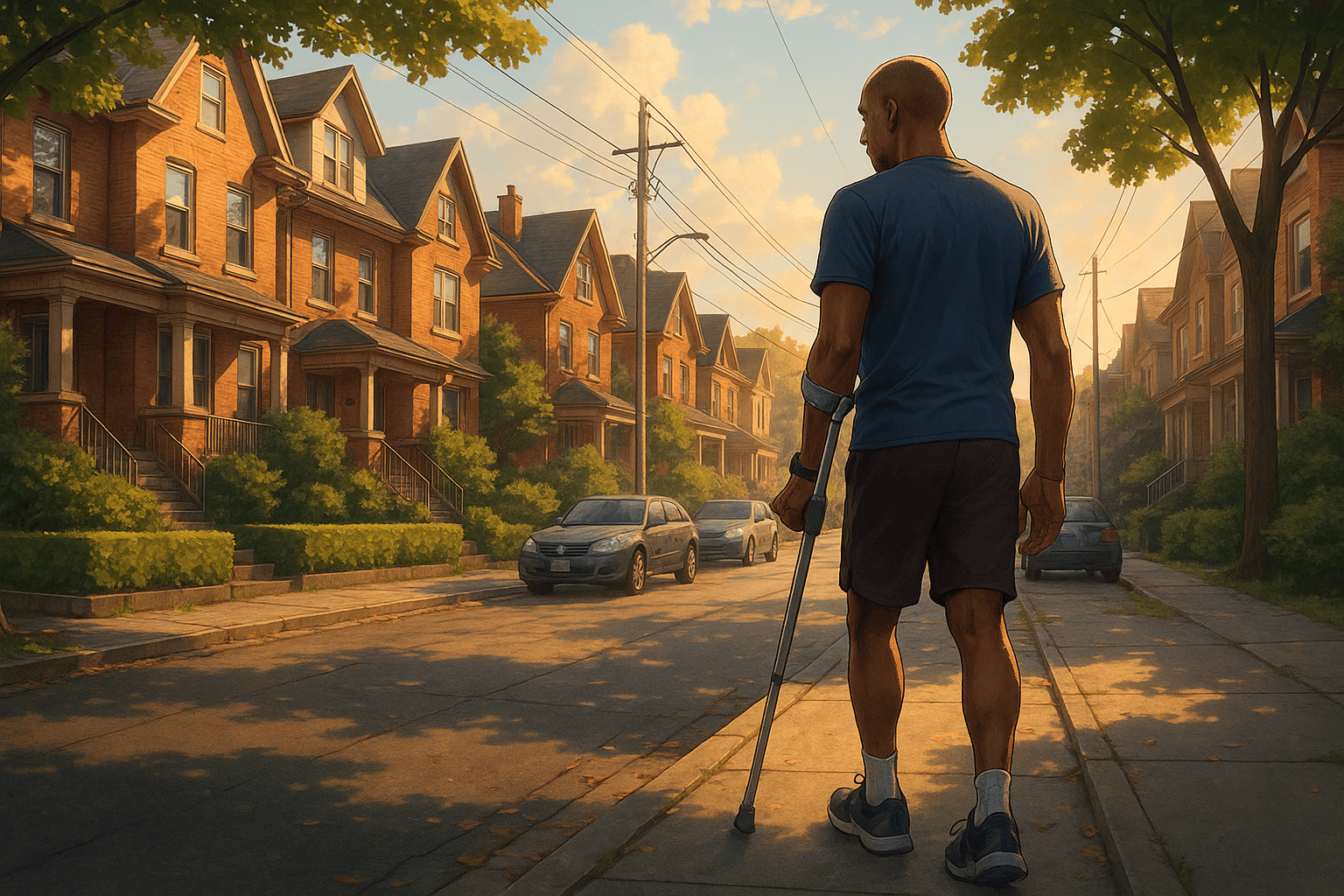
Getting Back in Shape After an Accident: How I Made Fitness Part of My Everyday Life
After a serious accident, I had to rebuild my fitness from the ground up, slowly, stubbornly, and with a lot of help from my wife and a Garmin on my wrist. Here's what actually worked for me and why I think movement, at any level, is worth starting today.
I'll be honest with you. Before the accident, I thought I was doing fine. Not great, but fine. I moved around a lot on the job, climbing stairs, hauling equipment, walking the building, and I told myself that counted as staying active. Then one incident changed everything, and suddenly even getting off the couch felt like a project.
Getting back into shape after an injury isn't glamorous. Nobody's posting their first painful shuffle around the block on Instagram. But that's exactly where it starts.
The Accident Changed My Perspective
I won't get into every detail, but the recovery period forced me to slow down in a way I never had before. As a superintendent, I'm used to being the one who fixes things, responds fast, keeps the building running. Being sidelined was genuinely hard for me mentally, not just physically.
What it did give me, though, was time to think. I realized I had been treating my body like a tool I could run into the ground and patch up later. That's not a strategy. That's just postponing a bigger problem.
So when I got clearance to start moving again, I committed. Not to a six-week transformation program. Just to movement. Consistent, honest movement.
Finding Fitness in the Everyday
One thing I started doing was treating regular tasks as part of my routine rather than interruptions to it. I work with my hands every day. Prepping equipment, checking units, coordinating repairs. I started being deliberate about how I moved through those tasks, taking the stairs intentionally, stretching before a heavy job, paying attention to how my body felt instead of just pushing through.
Had a morning once where I was prepping a washer for installation in a lower unit, and instead of rushing through it the way I normally would, I slowed down, moved with intention, and actually felt better afterward rather than beat up. Small shift, real difference.
Fitness doesn't only live in a gym. For people with demanding physical jobs, that's easy to forget.
Running Became the Anchor
I needed something structured though. Something I could track, build on, and feel progress with. I started running.
I want to be clear, I was not a runner. I did not enjoy running. My first few outings were short, slow, and humbling. But I kept going, and somewhere around week three or four, something clicked.
My wife started joining me. That changed everything. Having someone beside you who's also putting in the effort, on the days you'd rather skip it, makes it harder to bail. We'd go out in the mornings before work when we could, or evenings after a long day. It became something we did together instead of something I was grinding through alone.
Running with her made it enjoyable in a way I genuinely didn't expect.
The Garmin Epix Pro Gen 2: My Honest Take
I picked up a Garmin Epix Pro Gen 2 a while back and it's become a real part of how I train and recover. I'm not someone who buys gear for the sake of it, I wanted something that actually gave me useful data, not just flashy stats.
What I use it for most is tracking my runs and monitoring recovery. The Body Battery feature, which estimates your energy reserves based on sleep, stress, and activity, has been surprisingly accurate for me. On days when it's reading low, I've learned to take that seriously. I used to just push through everything. Now I actually adjust.
The sleep tracking is solid too. As someone who's on call and doesn't always get clean, uninterrupted sleep, seeing how fragmented nights affect my next-day performance has been eye-opening. It helped me understand why some runs felt harder than others.
The watch handles Toronto winters fine, by the way. I've had no issues with it in cold weather, and the display is easy to read even in low light during early morning runs.
It's not a cheap device, and I won't pretend otherwise. But for where I am in my fitness journey, it's been worth it. It keeps me accountable without making me obsessive.
You Don't Need to Be Ready to Start
This is probably the thing I'd most want someone coming out of an injury, or just coming off a long sedentary stretch, to hear. You don't need to feel ready. I didn't feel ready. I started anyway.
I've seen people in my building who are dealing with their own health stuff, and sometimes they ask me how I got started. I always tell them the same thing: pick something small, do it consistently, and don't wait for perfect conditions. Toronto weather will test you. Your schedule will test you. Your body will have off days.
Do it anyway.
Start with a walk. Walk the same route every day for two weeks. Then walk it a little faster. Then maybe jog part of it. There's no rule that says you have to run a 5K before any of it counts.
Recovery Is Part of the Work
One thing I didn't understand early on is that rest isn't the absence of training. It's part of it. I was so eager to make up for lost time after my accident that I kept pushing when I should have backed off. I paid for that with soreness that set me back.
Now I take recovery seriously. Sleep, hydration, the occasional full rest day. My Garmin helps me see when I'm overreaching, but honestly, you don't even need a fancy watch to know this. Your body tells you. I just had to learn to actually listen.
Where I'm At Now
I'm not going to claim I've got it all figured out. Some weeks are better than others. There are still mornings where getting out the door feels like a negotiation with myself. But I'm moving consistently, my fitness is genuinely better than it was before the accident, and I feel stronger on the job because of it.
Running with my wife is still a highlight. We've done some longer distances together now that would have felt impossible to me a year ago. That's progress I'm proud of.
The same everyday fitness routine is why I care about details like how I got 31+ days out of my Garmin battery.
If you're in a place where getting back in shape feels overwhelming, just start. Pick today. Pick something small. The rest builds from there.
Loading reactions…
Comments
New notes are reviewed before they appear. Be kind and on-topic.
Loading comments…
Related posts
Back From Knee Injury: Why Running a 5K Matters When You Manage Buildings
After overtraining led to a knee injury, I had to rebuild my running from scratch. Getting back to a full 5K reminded me that slowing down isn't weakness, it's how you stay in the game. For someone managing a building full-time, running isn't just fitness. It's how I stay sharp enough to handle what comes next.

One Kilometre at a Time: What a Knee Injury Taught Me About Coming Back to Running
After a month off from a knee injury, I laced up and headed back out, but this time I walked the whole kilometre instead of running it. No heroics, no shortcuts. Just one step at a time, and a few hard lessons I probably should have learned a long time ago.
I Pushed My Running Plan Too Fast
I was supposed to build back slowly. Instead, I felt good, jumped ahead, and my knees reminded me why the plan existed in the first place. This one is about running, but honestly it applies to work too: skipping steps catches up with you.