
Honesty Builds Trust: Why Character Matters in Building Superintendent Work
Trust isn't something you can manufacture or fake in this profession. As a building superintendent, your character shows in the small moments, and those moments add up to something that either earns you respect or quietly costs you it. Here's why honesty is the most practical tool I carry.
I found a cellphone a few weeks ago. Nothing dramatic. It was sitting near the pathway leading to the garage, partially tucked against the curb, looked like it had been there for at least a few hours. Newer model, no visible damage. I picked it up, logged it, let my staff know, and then reached out to the superintendents at a few neighbouring buildings in case whoever lost it came knocking somewhere nearby.
Nobody came. The phone eventually made its way through the proper channels.
That's really the whole story. And yet I keep thinking about it, not because it was a big deal, but because it was a small one. And small moments like that are exactly where your character actually gets built.
This Job Runs on Trust
I've been doing this long enough to know that the technical side of building management, the mechanical systems, the work orders, the preventive maintenance schedules, all of it is learnable. What's harder to teach is the trust that has to exist between you, your staff, your tenants, and the organization you represent.
Tenants let you into their homes. They hand over access to their most personal space based on nothing more than the confidence that you're going to do your job honestly and with integrity. That's not a small thing. I don't take it lightly.
When something goes wrong in a unit, when there's damage, a missing item, a complaint, anything, the first thing that gets tested is whether people believe you. And that belief isn't built in the moment of crisis. It's built in a hundred small moments before the crisis ever arrives.
What I Actually Tell My Staff
I don't give big speeches. That's not my style. But I'm direct about expectations, and I make those expectations clear early.
If you find something that doesn't belong to you, you report it. If you make a mistake on the job, you tell me before I find out some other way. If a tenant asks you a question and you don't know the answer, you say so and you follow up. Don't guess, don't deflect, don't go quiet.
The found cellphone was a chance to walk the talk in front of my team. I didn't make it a moment. I just handled it the way it should be handled, logged it, communicated it, passed it along properly. But they saw it. That matters more than a policy memo ever would.
The Quiet Cost of Cutting Corners
I've seen what happens in buildings where that culture doesn't exist. Not pointing fingers at anyone specific, just saying I've worked in enough places and talked to enough colleagues to know that when staff start covering things up, or when a super starts bending rules because "it's easier," the whole operation starts to drift.
A missing item in a unit becomes a he-said-she-said situation. A maintenance mistake that could've been caught early becomes a liability because no one said anything. A tenant who felt dismissed once doesn't forget. And in a government-subsidized housing environment, where tenants are often dealing with real vulnerabilities and have fewer options than most, the stakes of that drift are higher than in a lot of other property types.
This isn't about being perfect. I'm not perfect. But there's a difference between making a mistake and hiding one.
Respect Doesn't Come From a Title
Being the superintendent doesn't automatically make your staff respect you or your tenants trust you. The title gets you in the room. What you do when you're in there is on you.
I've seen supers who try to manage through authority alone. It doesn't hold. Staff disengage. Tenants work around you instead of with you. You end up spending more energy managing friction than actually running the building.
What actually earns respect, in my experience, is consistency. People want to know what to expect from you. They want to know that if you say something's going to be handled, it gets handled. That if you make a call, it's a fair one. That you're not playing favourites, not cutting corners for convenience, and not pretending you don't see what you clearly see.
The found cellphone wasn't a test of my integrity. It was just a thing that happened. But I think about the version of this job where someone pockets it, tells no one, and moves on. That version of this job costs you something. Maybe nothing immediate. But it costs you something.
Small Moments, Long Memory
Buildings have long memories, in a way. Tenants talk to each other. Staff notice what you do when you think no one's watching. Colleagues in neighbouring buildings form impressions of how you operate. Your reputation in this profession is built slowly and lost quickly.
I'm not trying to be anyone's moral compass. But I do think that showing up with honesty, even when it's inconvenient, even when it's just a found phone that probably no one would've noticed, is the baseline for doing this job with any real integrity.
It also just makes the job easier. When your staff know you're straight with them, they're straight with you. When tenants trust you, they communicate better and escalate less. When your organization knows you're accountable, you get the autonomy to actually manage your building rather than being micromanaged from above.
Honesty is practical. In this profession, it's one of the most practical things you've got.
That is a big part of what this job is really like in subsidized housing.
What I would do
The next time something small lands in front of you, a found item, a minor mistake, a situation where the easier path is to say nothing, ask yourself what the right call is. Then make it. Not because anyone's watching. Because that's the job.
Loading reactions…
Comments
New notes are reviewed before they appear. Be kind and on-topic.
Loading comments…
Related posts
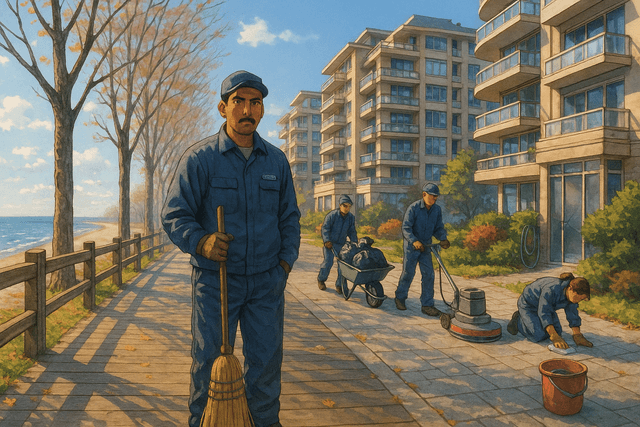
The People Behind Your Building: Why Good Staff Matter More Than You Think
Behind every well-run building is a team of people quietly holding things together, often without recognition, and sometimes under real pressure. This is what that work actually looks like, and why how you treat building staff matters more than most residents ever realize.

The People Part of Being a Superintendent
I thought this job would mostly be repairs, cleaning, keys, contractors, and work orders. Then I learned fast that the people side is just as important. A tenant can forgive a delay if they know what is happening. What they remember is being ignored.

Parking Areas in Multi-Unit Buildings: What Residents Get Wrong and How Superintendents Can Fix It
Shared parking areas are one of the biggest sources of conflict in any multi-dwelling building, and most of it is completely avoidable. From stolen spots to abandoned junk cars taking up prime real estate, I've seen it all. Here's what actually works when it comes to keeping order in a shared lot.