The Scooter in the Middle of the Hallway
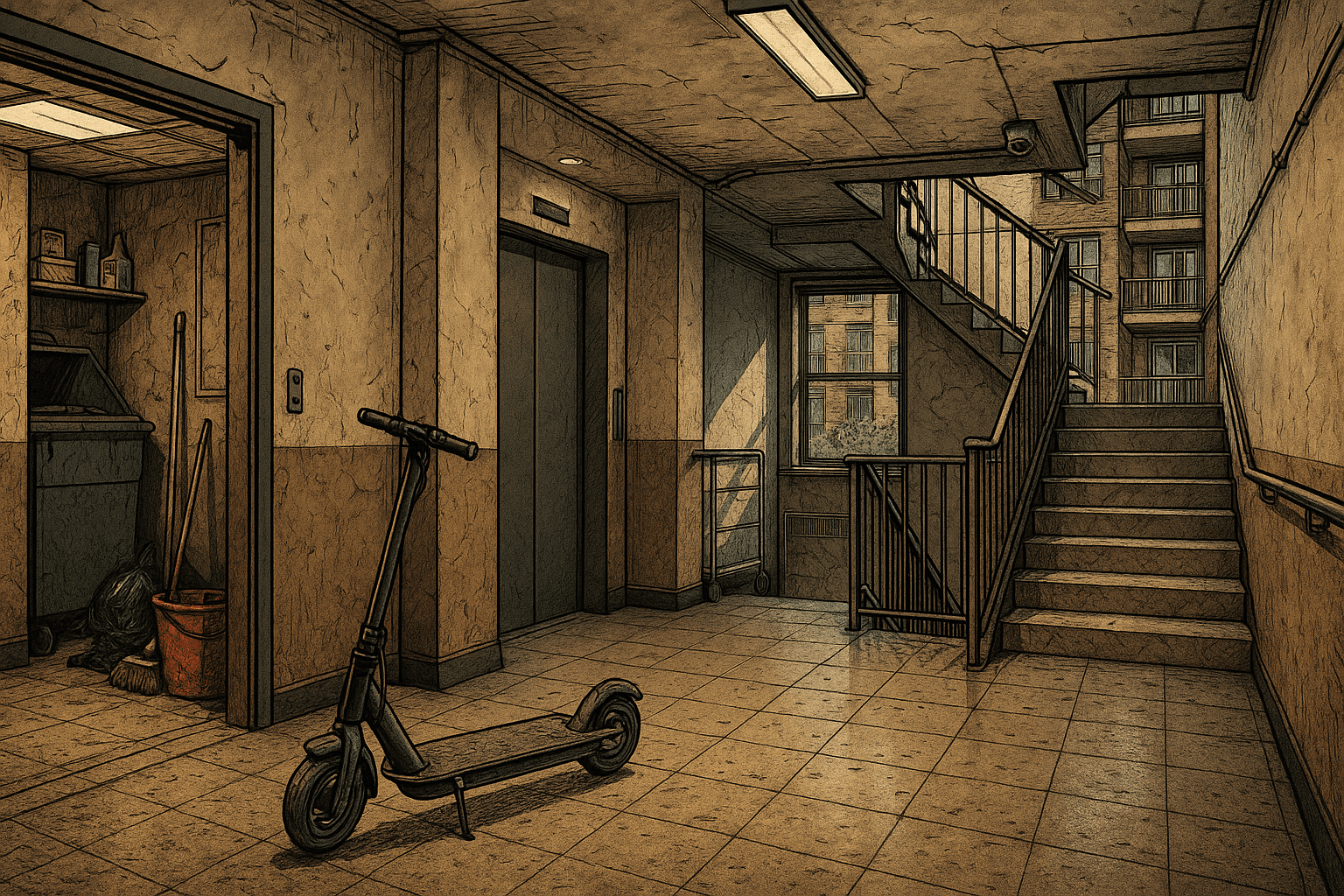
At 7:30, I moved someone's e-scooter out of the hallway. The tire marks were annoying, but the real problem was a rider passing too close to a resident who walks with a cane.
At seven-thirty in the morning, I was moving somebody's e-scooter out of the middle of the hallway. It was not leaning against a wall or tucked into a corner. It was parked dead centre, like nobody else used the floor.
In a building with older tenants, children, and people using mobility devices, that is more than an annoyance. It is a trip hazard sitting in the route everyone depends on.
My maintenance guy watched me move it and shook his head. He had been scrubbing black tire marks off the walls and floors for weeks. The rubber leaves long streaks that need the right cleaner and a lot more work than the rider probably imagines.
He told me people would keep doing it until something happened. I did not like hearing that, mostly because he might be right.
The conversation by the elevator
Around noon, a tenant stopped me near the elevator. I am leaving out her name and floor. She walks with a cane and said a young rider had almost clipped her the week before.
She did not fall. That does not make it harmless.
I told her we were working on it. She gave me the look people give when they have heard that sentence before. We had sent letters. I had knocked on doors. I had repeated the same conversation with several households. The hallway would improve for a week and then another scooter would show up.
From her side, another notice probably looked like more paper without a result. I could not blame her for being skeptical.
The scooter problem reminds me of why underground parking cannot become a storage room. Different part of the property, same issue. One person's convenient storage can create a hazard for everyone else.
Telling people no is not a storage plan
I kept coming back to the same question: if scooters cannot sit in the hallway, where should residents put them?
A secure storage area near the entrance might help. Clear signs near the elevators and stairwell doors might help too. If the safer option is also the easier option, most people will probably use it.
I was also thinking about clearer signs near the elevators and stairwell doors, along with updated lease language that spells out what happens after repeated violations. “Please be considerate” had not been enough.
The cleaning work is real work
The tire marks may look minor beside the safety issue, but they still matter. My maintenance guy is the person on his knees with a scrub brush while the rider is upstairs and probably has no idea how much work one trip down the hall created.
Dirty, marked hallways also change how the building feels. Residents who take care of the place notice when common areas start looking neglected. Staff notice too. It gets harder to ask people to respect a space when the damage is allowed to pile up.
That is why cleanup cannot be the whole response. We can remove the marks today and have them back tomorrow if the riding continues.
What I can do next
My quick shared-space check
When a hallway issue keeps coming back, I try to separate the problem into three parts.
First, is there an immediate hazard? If the answer is yes, the item moves. I do not wait for a meeting while someone with a cane or walker is trying to get to the elevator.
Second, is the rule clear? If residents only hear "do not do this" but never hear where the scooter, stroller, or cart should go, the same problem comes back.
Third, is the response consistent? One warning, one moved scooter, or one letter does not fix a pattern. If staff let it slide on Monday and enforce it on Friday, people learn that the rule depends on who is watching.
That is the part I am trying to improve. Clear path, clear option, clear follow-up.
I do not have a perfect solution yet. I can keep the walking route clear, speak privately to the responsible households, and stop sending vague warnings that disappear into the same pile as every other notice.
I can also keep pushing for a practical storage option. Once residents have a reasonable place to leave a scooter, the individual conversations become simpler. The hallway is not storage, and there is another place to use.
The other piece is consistency. If one scooter is allowed to sit outside a door, the next person will ask why theirs cannot. If staff only respond after a complaint, residents learn that the rule depends on who notices first. That is not fair to the person using the cane, and it is not fair to the staff trying to keep the building safe.
I also have to keep the conversation practical. Most people are not trying to create a hazard. They are trying to get in, plug in, and move on with their day. But convenience cannot take over the path everyone else needs to use. A hallway is shared space before it is anyone’s shortcut.
If that does not change the behaviour, the next step will be formal notices. Moving one scooter while ignoring another would make the rule look optional.
I expect I will have to move another scooter before this is solved. For now, the main concern is simple: the tenant who walks with a cane should be able to reach the elevator without watching for somebody riding around the corner.
Loading reactions…
Comments
New notes are reviewed before they appear. Be kind and on-topic.
Loading comments…
Related posts
Someone Was Urinating in the Stairwell
Camera footage confirmed why the stairwell kept smelling bad. The cleanup mattered, but so did handling the conversation privately and protecting the staff member left with the mess.
What Happens After You Talk to a Noisy Tenant (and They Sign the Paper)
You've had the conversation, they signed the compliance form, and now you're wondering if that's actually going to change anything. In my experience, this is where the real work starts, not where it ends.

What This Job Is Really Like in Subsidized Housing
Working as a superintendent in subsidized housing is not only maintenance. It is work orders, emergencies, vulnerable residents, boundaries, old building systems, and a lot of judgment calls nobody can fully teach you before you start.