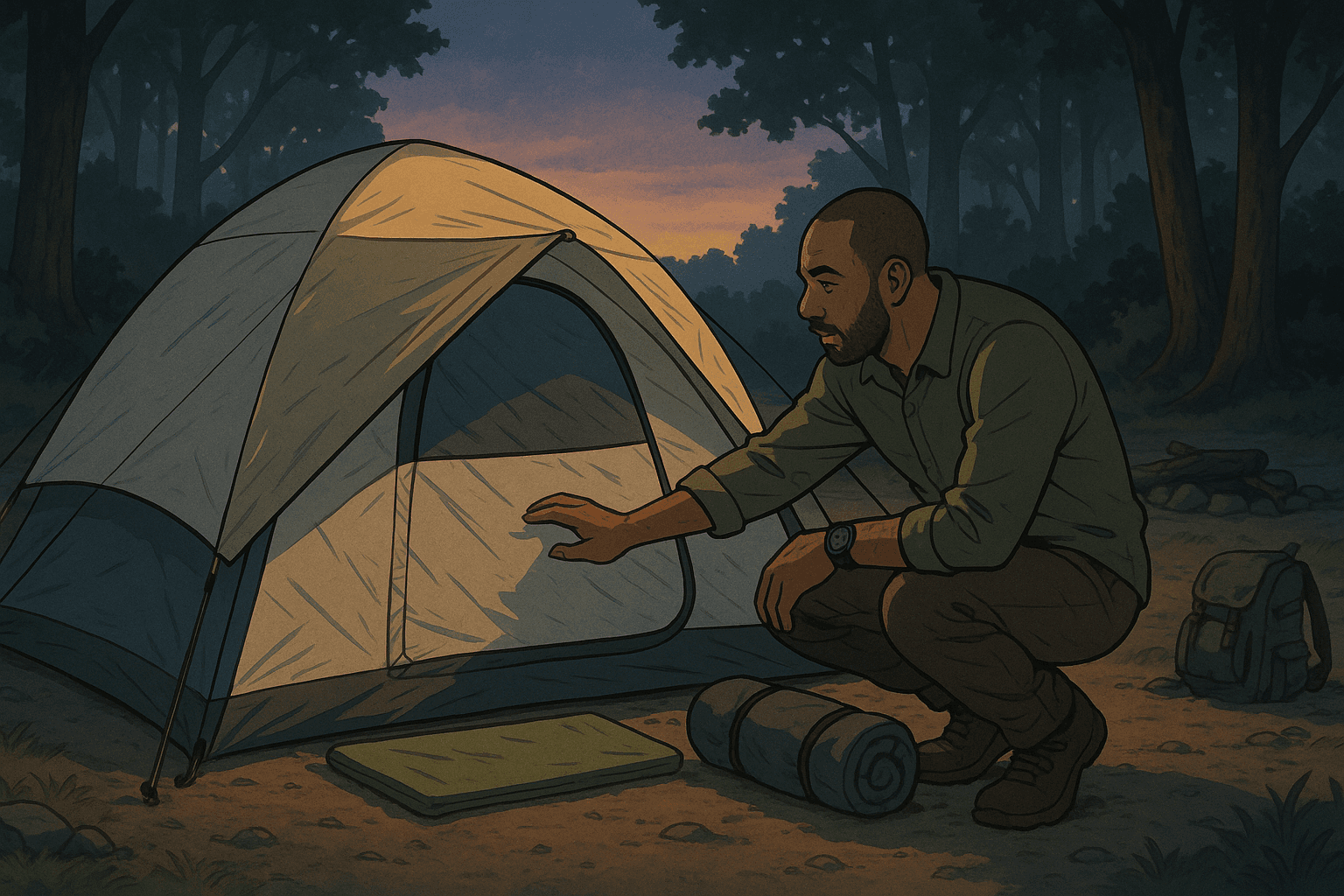
A Light Tent Gear Note: What I Check After Sleeping Outside
A light first-person gear note about the simple tent details I care about after using one outside: setup, rain, airflow, floor space, packing, and whether it makes the night easier.
A tent can look great in a store and still annoy you the first night you actually use it.
That is the part I care about now. Not the perfect product photo. Not the oversized spec list. Not somebody saying it is the best tent for everyone. I care about what happens when it is getting dark, the ground is not perfect, the wind is a little annoying, and you still need to sleep.
So this is not a brand review. I am not pretending I tested every tent out there. This is a light Gear Note about what I notice after actually using a tent outside, and what I would check before trusting one for another trip.
The first test is setup
A tent earns trust before you sleep in it.
If setup takes too much guessing, that is the first problem. I do not mind a tent having steps. I do mind when the steps feel unclear, the poles are easy to mix up, or the fabric only lines up after you fight with it.
The setup test I use is simple:
- Can I lay it out quickly?
- Do the poles make sense?
- Are the clips or sleeves obvious?
- Can one person get it standing without frustration?
- Does the rainfly line up without stretching everything sideways?
- Can I stake it properly without wondering where each point belongs?
A tent does not need to be instant. It needs to make sense.
The second setup test is even more honest: could I do it tired?
Because camping gear is easy to like when you are fresh in the afternoon. It is different when the sun is going down, your hands are cold, or you are trying to beat the rain.
Rain tells the truth fast
I do not trust a tent until I have thought about rain.
That does not mean I want to sit in a storm just to prove a point. It means I look at the parts that decide whether rain becomes a small inconvenience or a bad night.
I check:
- how the rainfly covers the tent
- whether water can run away from the door
- whether the seams look protected
- whether the floor rises enough at the sides
- whether the vestibule gives boots or gear a dry place to sit
- whether the tent needs a footprint or groundsheet for the spot I am using
Leave No Trace Canada tells campers to travel and camp on durable surfaces, and to think about how a site handles use before setting up. That fits how I think about tents too. The tent is only part of the night. The ground, drainage, and site choice matter.
For me, a good tent is not the one that makes rain disappear. It is the one that makes rain manageable.
Airflow matters more than I used to think
The first time you wake up with everything damp inside, you learn that waterproof is only part of the story.
A tent also needs airflow.
Condensation can make a good tent feel worse than it is. Warm breath, cooler night air, wet ground, and poor ventilation can all make the inside feel damp. That is why I pay attention to vents, mesh panels, door position, and whether the rainfly lets air move without letting rain blow in.
My quick check is this: can the tent breathe while still feeling protected?
If the answer is no, I know I may wake up wiping moisture off the inside.
Floor space is not just the number on the box
Tent capacity can be funny.
A two-person tent might technically fit two people, but that does not mean it fits two people comfortably with bags, boots, layers, and the messy reality of sleeping outside. The floor plan matters. The wall angle matters. The vestibule matters.
I look at where my head, shoulders, and bag actually go.
Can I sit up enough to change a shirt? Can I reach the door without climbing over everything? Is there a dry spot for shoes? Does the tent feel cramped the second I bring gear inside?
A tent can pass the spec sheet and still fail the comfort test.
The zipper test is real
This sounds small until it is midnight.
A sticky zipper can ruin the whole feeling of a tent. If the door catches fabric every time, or if opening it needs two hands and patience, I notice right away.
I like zippers that move cleanly, corners that do not snag, and doors that can be opened quietly without waking everyone up.
This is one of those little details that never looks important in a listing, but it matters in real use.
Packing it back up matters too
Some tents are easy to set up and annoying to pack.
I do not expect the tent to roll back into the bag perfectly every time, but I do want the bag to be realistic. If packing it feels like wrestling a sleeping bag into a sleeve that is too small, that gets old fast.
The pack-up test is:
- Does the fabric shake out easily?
- Do the poles break down cleanly?
- Is the bag big enough for normal human folding?
- Can wet or dirty stakes be separated from clean fabric?
- Would I still be patient with this after a long weekend?
Gear that packs easily gets used more. Gear that fights you stays in storage.
What I would not judge too quickly
I try not to judge a tent from one perfect afternoon.
A tent needs different conditions before you really know it. One calm summer night tells you something, but not everything. Rain tells you more. Wind tells you more. A cold morning tells you more. Packing it up wet tells you more.
That is why I like calling this a Gear Note instead of a final verdict.
The real review is built over time.
My simple tent checklist
Before I trust a tent, I want these boxes checked:
- setup makes sense without overthinking
- rainfly fits cleanly
- stakes and guy lines feel practical
- airflow is decent
- floor space matches real use
- door and zipper do not fight me
- vestibule or entry area handles shoes and small gear
- bag is not too tight for normal packing
- materials feel appropriate for the kind of trip
- I would willingly set it up again
That last one is the honest test.
If I would not want to use it again, the specs do not matter much.
The bottom line
A good tent does not need to be fancy. It needs to make the night easier.
For me, that means simple setup, enough dry space, decent airflow, a door that works smoothly, and a pack-up process that does not make me regret bringing it.
That is the kind of gear I trust: not because it looks perfect, but because it behaves well when I am tired, outside, and ready to sleep.
Loading reactions…
Comments
New notes are reviewed before they appear. Be kind and on-topic.
Loading comments…
Related posts

Three Days at Sibbald Point and I Didn't Check My Work Phone Once
We packed the car and drove an hour north to Sibbald Point at Georgina, and it ended up being exactly what we needed. Three days of campfires, beach time, and my son setting up a tent for the first time. No complaints, except maybe the trail.
The Tested Way I Unplug a Toilet Before It Becomes a Bigger Problem
A practical superintendent field note on how I handle a plugged toilet: stop the water, use the right plunger, know when to use an auger, and avoid risky chemical shortcuts.
What Happens After You Talk to a Noisy Tenant (and They Sign the Paper)
You've had the conversation, they signed the compliance form, and now you're wondering if that's actually going to change anything. In my experience, this is where the real work starts, not where it ends.