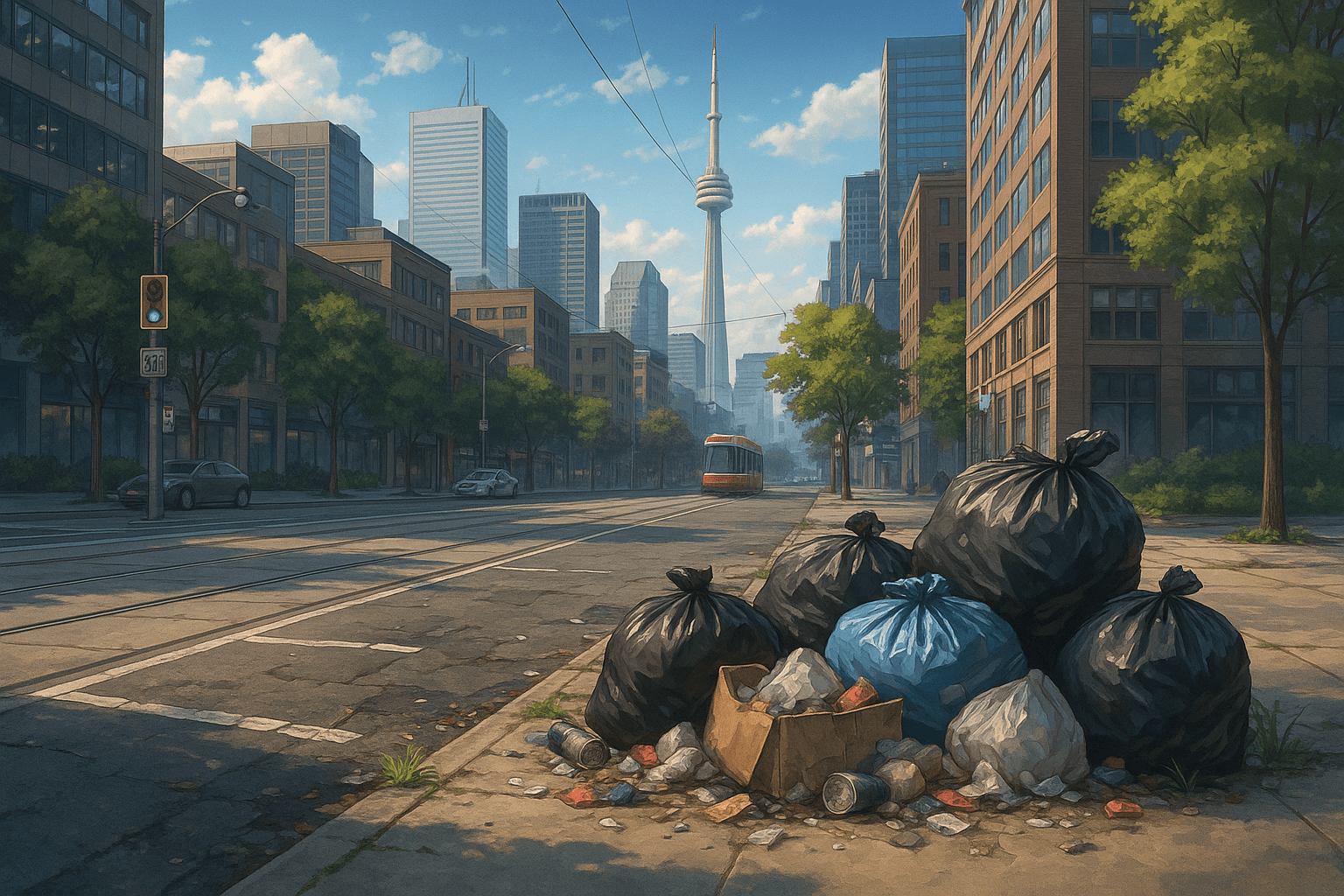
The Garbage People Leave Behind
Illegal dumping sounds like a city problem until it lands beside your building, in your garbage room, or near a walkway tenants use every day. I have seen how fast one dumped item turns into five more, and how quickly a small mess becomes staff time, cleanup costs, pest issues, and complaints.
Illegal dumping always seems to start with one thing.
One mattress beside the bins. One broken chair near the curb. One bag tossed behind a fence because someone did not want to deal with it properly.
Then, almost overnight, it grows.
Another person sees the mattress and thinks, I guess this is where stuff goes now. Then a box shows up. Then construction scraps. Then black garbage bags. Before long, the spot looks abandoned even if people live right beside it.
I have seen this happen around buildings more times than I can count. It is not just ugly. It changes how people treat the space.
Mess invites more mess
There is something about a dirty area that gives people permission to make it worse.
If the garbage room is clean and the rules are clear, most people behave. Not everyone, but most. If the area already looks neglected, some residents stop caring. They leave things outside the chute. They dump furniture where it does not belong. They walk away from a mess because someone else already started it.
That is one of the reasons building staff jump on dumping quickly. It is not because we enjoy chasing garbage. It is because if we leave it, the problem multiplies.
A mattress left for two days becomes a pile.
It costs more than people think
People sometimes act like illegal dumping is free.
It is not. Someone pays.
If staff have to drag items out, that is labour time. If a vendor has to remove bulk waste, that is a service cost. If something damages equipment, blocks access, attracts pests, or creates a safety issue, now the cost is bigger. In some cases, the building can also get complaints or fines depending on where the garbage ends up.
And the frustrating part is that a lot of this can be avoided by using the proper bulk pickup process.
Most places have a way to dispose of large items. It might be a scheduled pickup, a designated room, a call-in process, or a drop-off site. It is rarely as convenient as dumping something and walking away, but it is the difference between a normal building operation and a mess everyone has to deal with later.
It becomes a safety issue fast
Old furniture is one thing. Sharp metal, broken glass, paint cans, electronics, batteries, or renovation debris are another.
I have seen bags rip open with things inside that should never have been placed near regular garbage. I have seen items left where people walk, where kids pass through, or where staff have to reach in and move things by hand.
That is when it stops being only a cleanliness issue.
Now you are talking about cuts, pests, blocked exits, fire risk, and staff getting hurt cleaning up something they should never have had to touch in the first place.
If you would not want your kid, your parent, or your neighbour stepping around it, it probably should not be dumped there.
Pests do not need an invitation twice
Garbage attracts pests. That is not complicated.
Food waste, leaking bags, open containers, and dumped items give rodents and insects exactly what they need. Once they find a reliable food source, they come back. Then residents start seeing mice, roaches, flies, or worse, and everyone wants the building to fix it immediately.
We can call pest control. We can clean. We can seal gaps. But if people keep feeding the problem with bad disposal habits, the issue keeps coming back.
Garbage control is pest control. People forget that.
The environment part is real too
I am not going to pretend every dumped couch is an environmental disaster. But some waste absolutely does harm the land and water around us.
Batteries leak. Paint and chemicals seep. Electronics contain materials that should not be sitting in the rain. Garbage near drains can wash into waterways. Animals get into bags and spread waste around.
It all adds up.
The problem with illegal dumping is that it takes something that should be controlled and puts it somewhere nobody is managing it.
That is when small decisions become bigger problems.
What actually helps
Clear instructions help. Good signage helps. A proper bulk item process helps even more.
People need to know what to do with mattresses, old furniture, electronics, paint, and renovation waste before they are standing there with the item in their hands. If the right option is hard to find, some people will take the lazy option.
Reporting helps too. If you see someone dumping, report it. If you see a pile starting, report it early. Building staff and city crews can deal with one item much faster than a full pile that has been sitting for a week.
And if you are the person getting rid of something, do it properly. Call the pickup line. Use the bulk room. Ask the superintendent. Check the city rules. Whatever the process is, use it.
It comes down to respect for the place
Garbage tells you a lot about a building.
Not because garbage itself is interesting, but because it shows whether people think the shared space belongs to them or to nobody.
When residents treat the building like nobody owns the problem, staff end up carrying the weight. When people take two extra minutes to dispose of something properly, the building feels different. Cleaner. Safer. Less chaotic.
Nobody is asking for perfection.
It connects directly to why the compactor room is not a magic hole.
Just do not be the person who starts the pile.
Loading reactions…
Comments
New notes are reviewed before they appear. Be kind and on-topic.
Loading comments…
Related posts
The Scooter in the Middle of the Hallway
At 7:30, I moved someone's e-scooter out of the hallway. The tire marks were annoying, but the real problem was a rider passing too close to a resident who walks with a cane.
We Drove North and I Left the Building Behind
Sometimes the best thing you can do for the building is leave it. My wife and I packed the car, pointed it north, and I tried something I'm genuinely not good at: switching off. Here's how that went.

The Compactor Room Is Not a Magic Hole
Most tenants only notice the garbage compactor when it stops working. I get it. When it is doing its job, you toss the bag in and move on. But that machine is one of the things keeping a building from turning messy fast, and it does not take much abuse to make everyone’s day worse.